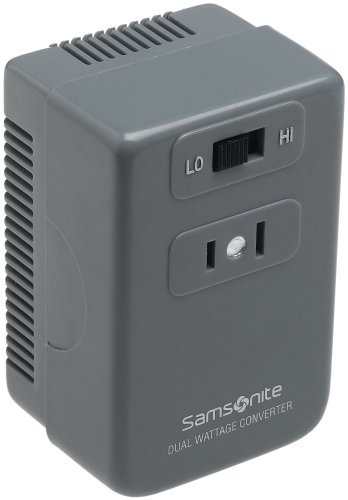
The transformer is an electrical device, which transforms voltage through magnetic coupling with no moving parts. It consists of a magnetic core, with two or more coupled windings, which either steps up or steps down the incoming voltage. This is done by the transfer of energy from one circuit to the other, through the magnetic core. These windings are generally termed as Primary and Secondary windings. The electromagnetic field thus created under goes a process of expanding and collapsing around the conductor and this changes the induced current, with the formation of an out put from the secondary coil, either stepping up or stepping down the input voltage.
In order to understand the function of a transformer, only two sets of windings are considered. When the main AC voltage is applied to the input of such an electrical device, the alternating current in the Primary winding creates a time varying magnetic flux in the core. This induces an AC voltage in the secondary coil, which is either the step up or step down voltage of the device. The terms, step up and step down are used with respect to the input voltage of the device. Therefore, if your equipment has been specified as input voltage 110 Volts AC, and if you are in one of those countries where the mains power supply is 220 Volts AC, you will need a step down transformer to run your equipment.
In high tension power transmission, where huge towers carry the cables which brings the power to cities, towns and villages, step up transformers are used as the power leaves the power stations and as they approach the destinations, the voltage is stepped down to the required mains supply, before it is distributed amongst the consumers. The reason for stepping up the power as they leave the power station is for the fact that,as it travels down the long power cables, there are power losses in the way, and the supply can reach the destinations in a proper specified power level to be stepped down as required by the consumers. In this application there are good many use of transformers are made.
The transformer is the most simplest of all electrical devices and its basic principle has not changed over the last 100 years, though the material used in such transformers and its design continue to improve. It has a very important application in transforming electrical energy, both for consumer use and power transmission. In a similar way, audio frequency transformers have been used in earlier experiments in development of telephones. These are still found in many electronic devices. The transformers come in various sizes, depending upon the application it is required for. It comes in the size of a thumb nail to huge units for the power transmission applications of national power grids. They all operate with the same basic principles.
The core of the transformer, as we have seen above, may be made with various materials. These include:
Air - This is ideal for high frequency transformer, with application in Radio Frequencies and provides least coupling.
Iron - All so called iron core transformers are steel. Various additives are made to improve the magnetic properties, as for example the magnetic permeability. The degree of magnetisation of a material required for a linear response to an applied magnetic field is termed as Permeability.
Ferrite - This is used to get a very high degree of permeability and excellent high frequency performance.
Etc.
The converter and the transformer are both electric conversion products, that enables you to run electric devices in foreign lands. As discussed earlier, if your electric device requires 110 Volts AC to run, you will need a transformer to step up the 220 volts AC supply voltage to 110 Volts AC before you can switch on that device that you have.
What is the difference between a converter and a transformer? If the device you are going to operate is a high power heating element or mechanical motor such as a hair dryer or iron, you will need a converter to run those appliances. But if your device is a computer, a printer or a VCR, you will need a transformer. Both of these category of appliances and devices can be run by a transformer, but only the electric appliance can be run with a converter. A word of caution in here is that, while transformers are designed for long term continuous operation, converters on the other hand can operate for an hour or two at a time.
In order to understand this better, we must understand the formation of a AC voltage. The alternating current voltage appears as a sine-wave, and depending upon the country you are in, the frequency of this sine-wave is either 50Hz or 60Hz. Now, if you look at a converter output, you would see that the upper half of the sine-wave has been chopped off, where-as, in a transformer the sine-wave remains in-tact. The electrical devices, like, iron, heater, a hair dryer, etc, would run with such a converter, but a computer, a printer or a VCR can be damaged if you attempt to operate those with a converter.
The frequency is the number of times the alternating voltage alternates each second. One such alternating cycle is termed as Hertz, having Hz as the short form. This cycling wave is termed as a Sinusoidal Wave. In the U.S. and the rest of North and Central America, with some parts of South America, the alternating current suppy is 60Hz. In Europe and rest of the world it is 50Hz.
There is a similar electrical device called Inverter. The purpose of this equipment is to convert Direct Current (DC) voltage to Alternating Current voltage. This device has many applications, for example, to provide appropriate limited AC power supply to devices like, electric fans, lights, etc. This inverter takes the DC voltage from a battery, like a heavy duty car battery and converts that into an appropriate AC voltage. Such supplies are limited because of the capacity of the battery capability and depending upon the battery the ampere-hour of the output can be increased, resulting in longer period of operation. The battery will need charging once it discharges.
There are variable transformers, which are known as Variacs. The principle is that the output voltage of this transformer can be manually varied with a fixed voltage as its input. For example, with a 110 Volt AC supply at the input, you can vary the output voltage from 0 to 110 Volts AC. The typical applications of these transformers are in testing devices for its lower and higher input voltage operation levels, quality control in testing equipment in burn-in condition, temperature and lighting control, etc.
Transformers are essential devices to operate any electrical or electronic equipment. As far as main supply voltage is concerned, if you are visiting Europe or any other country in Asia, the devices that you are taking with you will not operate in the mains supply voltage available in those countries. It is therefore necessary that you take with you the right device which can provide you with the right operating voltage for your equipment.

 Great Deal : $22.00Date Created :Apr 02, 2011 20:36:37